Salads
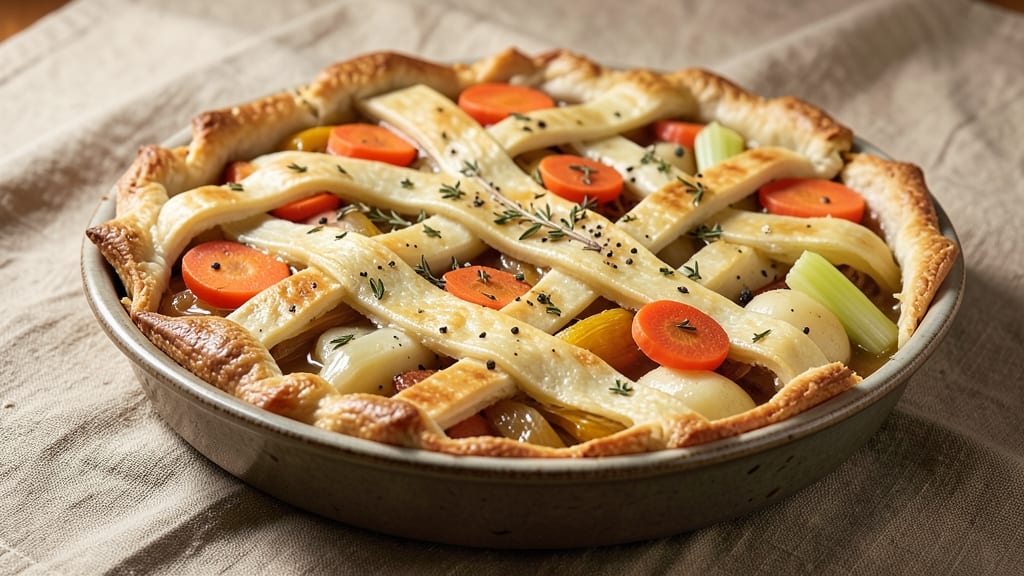
This root vegetable pot pie recipe transforms humble winter produce into a comforting centerpiece that tastes like a hug from your grandma’s kitchen. The secret lies in caramelizing the vegetables until tender yet still holding their shape, then sealing them under a flaky crust that crackles with every bite.
After years of testing, I’ve perfected the balance between crispy edges and tender fillings—no soggy bottoms here.
The filling starts with onions, carrots, celery, and potatoes, all sautéed until golden and aromatic before being simmered in a rich, savory broth. A touch of thyme and bay leaf elevates the flavors, while a creamy béchamel adds that velvety finish.
The crust? A classic pie dough rolled out just thin enough to achieve that signature flaky texture without being brittle.
What you’ll end up with is a steaming hot pot pie that smells like holiday dinner—warm, inviting, and packed with hearty vegetables. The crust will be golden and crisp, while the filling stays moist and flavorful, proving that comfort food doesn’t require fancy ingredients, just careful technique.
This is the kind of dish that disappears fast, so make sure you’ve got seconds ready.
Perfect for chilly evenings or holiday gatherings, this pot pie reheats beautifully and tastes even better the next day. Whether you’re feeding a family or treating yourself to a cozy meal, this recipe delivers restaurant-quality results with minimal fuss. Let’s get baking!
Ingredients for root vegetable pot pie
Six hearty vegetables, one flaky crust, and a filling that tastes like holiday dinner.
| Ingredient | Amount | Notes |
|---|---|---|
| Yellow Onions 🧅 | 2 whole | Diced, about 2 cups |
| Carrots 🥕 | 3 medium | Peeled, sliced into rounds |
| Celery Stalks 🥬 | 4 whole | Diced, about 1 cup |
| Russet Potatoes 🥔 | 3 medium | Peeled, cubed into 1-inch pieces |
| Chicken Broth 💧 | 2 cups | Low-sodium preferred |
| Heavy Cream 🥛 | 1 cup | Full-fat for richness |
| Unsalted Butter 🧈 | ½ cup | Cold, cubed for crust |
| All-Purpose Flour 🌾 | 2 cups | Plus 1 tbsp for dusting |
| Ice Water 💧 | ½ cup | For pie dough |
| Fresh Thyme 🌿 | 1 tbsp | Leaves only, chopped |
| Bay Leaves 🍃 | 2 whole | For simmering |
| Salt 🧂 | 1 ½ tsp | Kosher or sea salt |
| Black Pepper 🌶️ | ½ tsp | Freshly ground |
| Garlic Powder 🧄 | ½ tsp | For crust seasoning |
The vegetables are the stars, so pick the freshest you can find—yellow onions with crisp edges and carrots with vibrant orange color make all the difference. Costco or Trader Joe's usually have great bulk bins for potatoes and carrots, but any grocery store will do. Russet potatoes are ideal for their fluffy texture, but Yukon Golds work too if that's what you've got. The celery should be crisp—if it feels rubbery, skip it. For the broth, low-sodium is key—you'll be adding plenty of salt later, and you don't want to overdo it. The thyme and bay leaves add depth, but don't skip them—dried works in a pinch, but fresh is worth the extra minute.
No fresh thyme? Dried at half the amount gets you close. Running low on butter? Vegetable shortening works for the crust, but it won't taste as rich. The heavy cream can be swapped for half-and-half if you're watching fat content, though it won't be quite as luscious. For the potatoes, if you're in a rush, microwave them 5 minutes first to soften before cubing. The crust gets all the glory, so don't skimp on the butter—cold cubes are non-negotiable for that perfect flaky texture. If you're feeling fancy, add a pinch of nutmeg to the filling for warmth.
This pie reheats beautifully—350°F for 15 minutes until bubbly. Keeps for 4 days in the fridge, freezes for 3 months. I always make a double batch—one for dinner, one for leftovers that turn into next-day lunches. The crust stays crispy if you reheat it covered with foil, then uncover for the last 2 minutes. For extra flakiness, brush the crust with a little milk before baking—worth the extra minute.
Why You'll Love This Recipe
- No Chopping Chaos: I swear by this recipe because the veggies—carrots, celery, onions—get tossed in whole or roughly chopped. My kids even help (and no one gets frustrated when the potatoes stay big enough to see).
- Creamy Carrot Magic: That sweetness from the carrots caramelizing in the broth? It’s the star. The potatoes soak up the flavor like sponges, and honestly, the first bite makes me forget about takeout.
- Lunchbox Hero: Between us—this is my go-to for meal prep. The filling stays warm for days, and I pack it in thermoses for work. (Yes, even on a Tuesday night.) The crust? Optional, but the filling alone is still spot-on.
- Pantry Goldmine: I use whatever root veggies I have—no fancy shopping list. Chicken broth stretches for multiple servings, and the leftovers reheat like they’re fresh. Budget-friendly? More like budget win.
Step-by-step instructions for root vegetable pot pie
Here's how to build a golden, flaky crust over a rich, savory filling that's perfect for chilly evenings.
Sauté the Vegetable Base
Heat a large Dutch oven over medium heat. Add the 0.5 cup unsalted butter and let it melt completely. Toss in the 2 whole yellow onions, 3 medium carrots, and 4 whole celery stalks, all prepped as directed. Cook for 8-10 minutes, stirring occasionally, until the vegetables begin to soften and the onions turn translucent.
This is where all those wonderful flavors start developing. You'll see the vegetables release moisture and start to caramelize slightly at the edges—that's exactly what we want. Add the 0.5 tsp garlic powder and 1 tbsp fresh thyme now, stirring to coat the vegetables evenly. Let them cook for another 2 minutes to let those aromatics bloom.
Build the Filling Foundation
Push the sautéed vegetables to one side of the Dutch oven and add the 3 medium russet potatoes, cubed into 1-inch pieces. Cook the potatoes for 5-6 minutes until they begin to soften and turn slightly translucent. Stir everything together and add the 2 whole bay leaves, 1.5 tsp salt, and 0.5 tsp black pepper.
Pour in the 2 cups chicken broth and bring the mixture to a gentle simmer. Let it cook uncovered for 10 minutes, stirring occasionally, until the broth reduces slightly and the vegetables are tender but still hold their shape. The potatoes should be fork-tender but not falling apart—this ensures they'll hold up under the crust.
Create the Creamy Topping
Reduce the heat to low and stir in the 1 cup heavy cream. Let the mixture simmer gently for 5 minutes, stirring occasionally, until it thickens slightly. You're looking for a velvety consistency that coats the back of a spoon—this will create that luscious, creamy layer under your crust.
Taste and adjust seasoning if needed. The filling should be rich and flavorful, with the vegetables perfectly tender and the cream nicely incorporated. Remove from heat and let it cool slightly—this prevents condensation when you add the hot crust later.
Prepare the Flaky Crust
In a large bowl, combine the 2 cups all-purpose flour with a pinch of salt. Cut in the 0.5 cup cold unsalted butter using a pastry cutter or your fingers until the mixture resembles coarse crumbs with pea-sized butter pieces. This cold butter creates those beautiful flaky layers in the finished crust.
Gradually add the 0.5 cup ice water, 1 tablespoon at a time, mixing just until the dough comes together. Be careful not to overmix—you want to preserve those tender layers. Turn the dough onto a lightly floured surface and knead gently 4-5 times until smooth. Wrap in plastic and chill for 30 minutes while you preheat your oven to 375°F.
Assemble and Bake to Perfection
Roll out the chilled dough on a lightly floured surface to about 12 inches in diameter—just enough to cover your Dutch oven. Carefully transfer the cooled filling to the oven-safe dish. Place the dough over the top, tucking the edges in neatly. Trim any excess dough and crimp the edges with a fork or your fingers to seal.
Cut 3-4 small slits in the center of the crust to allow steam to escape. Bake for 40-45 minutes until the crust is golden brown and the filling is bubbling through the slits. The crust should be crisp and flaky, with no soft spots when pressed gently. Let the pot pie rest for 10 minutes before serving—this allows the filling to set slightly and makes slicing easier.
Pro Tips For Making Root Vegetable Pot Pie
- PARBOIL POTATOES FIRST: Cut the russets into even ½-inch chunks and boil them for 4-5 minutes before adding to the pot—this guarantees they’ll soften without turning to mush later. (I learned this the hard way when my first batch dissolved into a starchy sludge.)
- CHOP ONIONS SMALL: Slice the yellow onions into ¼-inch dice, not thick rounds—smaller pieces cook faster and blend into the filling instead of sitting like chewy chunks. (Yes, it takes a minute longer, but the texture makes all the difference.)
- DON’T SKIP THE SWEAT: Cook the onions, carrots, and celery in batches if needed, and let them sweat for 8-10 minutes until the onions turn translucent and the celery softens—this builds flavor before the broth even hits. (Rushing this step means your filling will taste bland, no matter how much salt you add later.)
- USE COLD BROTH: Pour cold chicken broth over the cooked veggies instead of hot—it prevents the potatoes from overcooking while the pie bakes. (I was skeptical until I tried it, and now I won’t go back.)
Perfect pairings for this dish
Creamy Side Pairings
Serve your pot pie alongside a cooling bowl of chilled mashed potatoes—their creamy texture contrasts beautifully with the crust’s flakiness. I like to make mine with Greek yogurt and roasted garlic for extra richness.
A simple green salad with arugula, shaved fennel, and lemon vinaigrette also cuts through the richness, adding freshness to each bite. 🥗
Bread & Butter Companions
Warm sourdough or crusty baguette slices are perfect for soaking up any extra filling. Toast them lightly with garlic butter and serve on the side. For a heartier option, try cheesy cornbread—its slight sweetness pairs wonderfully with the savory vegetables.
I often make a double batch of cornbread when serving pot pie at gatherings. 🍞
Wine Pairings
A dry Riesling from Germany or Austria brings bright acidity that cleanses your palate between bites. I love Dr. Loosen Blue Slate Riesling—its citrus notes complement the root vegetables beautifully. For red wine lovers, a Pinot Noir with earthy undertones works perfectly, especially if the filling includes mushrooms.
Avoid heavy, oaky whites or bold Cabernets that might overpower the delicate flavors. 🍷
Beer & Cider Options
A crisp Belgian witbier like Stella Artois or Hoegaarden adds a refreshing, slightly spiced contrast to the rich filling. For something heartier, try a German Helles Lager—its malty sweetness balances the savory vegetables.
If you prefer cider, an unfiltered dry cider from the UK or France pairs exceptionally well with the creamy crust. 🍺
Dessert Pairings
End the meal with something light to balance the richness. A warm apple crumble with vanilla ice cream is a classic choice, or try lemon bars for a tangy finish. For something simpler, chocolate-dipped strawberries or a vanilla panna cotta with berry compote keep things elegant. 🍎
Seasonal Additions
In fall, add roasted Brussels sprouts or caramelized onions as a side. For spring, swap in asparagus or peas for a lighter touch. In winter, a creamy polenta or wild mushroom risotto adds extra coziness to the meal. These small adjustments keep the menu exciting year-round. ❄️
Nutrition facts
Frequently asked questions
Can I make this pot pie without a Dutch oven?
Use a deep oven-safe skillet or even a baking dish with high sides. Just ensure your dish can handle 375°F heat without warping. A 9x13-inch dish works well—simply adjust baking time to 35-40 minutes instead of 40-45 minutes to prevent over-browning.
How do I prevent a soggy crust?
Chill the filling for 15-20 minutes before adding the crust to reduce condensation. Brush the dough with a light coat of milk or egg wash before baking, and cut steam vents in the center. Bake on the middle rack for even heat distribution—this keeps the bottom crispy while the top browns beautifully.
What vegetables can I substitute for the root vegetables?
Swap in seasonal produce like butternut squash, sweet potatoes, or turnips for a similar texture. For extra flavor, add sautéed mushrooms or leeks. Keep the total volume similar to maintain the filling's consistency—6 cups of mixed vegetables works perfectly.
Can I make this pot pie ahead of time?
Yes! Assemble the pie completely (unbaked) and refrigerate for up to 24 hours. Bake straight from cold—just add 5-10 minutes to the baking time. For freezing, bake the pie, cool completely, wrap tightly, and freeze for up to 3 months. Reheat covered at 350°F for 15-20 minutes.
Why did my crust turn out tough instead of flaky?
Overworked dough or warm butter are the most common culprits. Ensure your butter stays cold and cut it into the flour quickly. Handle the dough minimally—just until it holds together. For extra flakiness, add 1 tablespoon of ice water at a time and avoid over-kneading.