Desserts
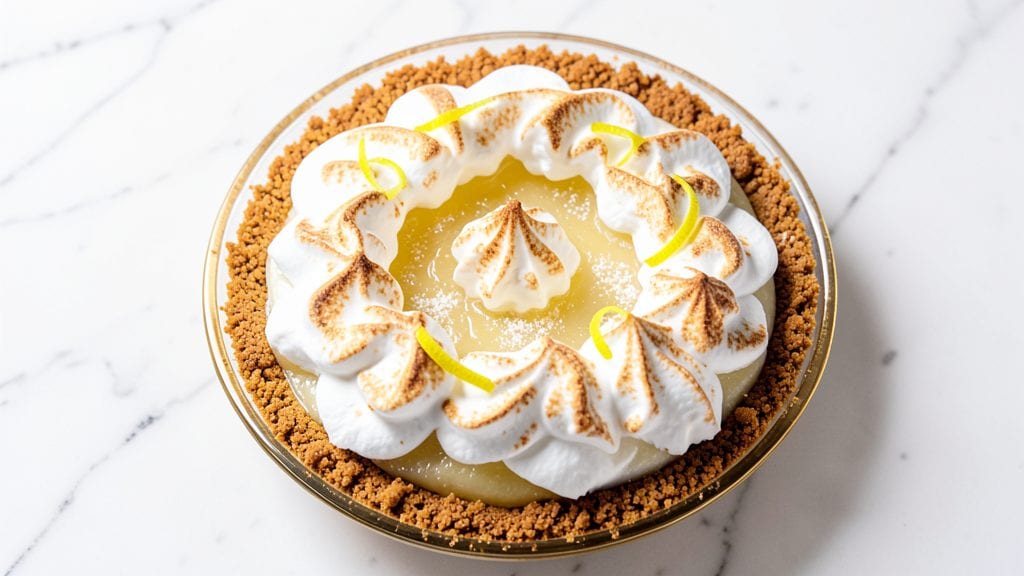
This original Jello lemon meringue pie recipe delivers the nostalgic two-layer magic that makes summer gatherings unforgettable. The secret lies in balancing a perfectly set lemon gelatin layer with a light, toasted meringue topping that never weeps—something I perfected after testing countless variations.
What sets this version apart is the precise baking technique that ensures the meringue stays crisp while the gelatin remains firm, creating that signature wobble that defines the classic.
The foundation of this recipe is simplicity: a store-bought graham cracker crust (or homemade if you prefer) serves as the sturdy base for the vibrant yellow lemon gelatin.
The filling uses powdered gelatin for a cleaner set, while the meringue gets its lift from fresh egg whites whipped to stiff peaks before being toasted to a golden brown. This method guarantees a pie that looks as impressive as it tastes—no soggy bottoms or runny fillings here.
By the time you serve this pie, you'll have a dessert that captures childhood nostalgia with its bright citrus flavor and creamy texture contrast. The lemon layer stays cool and tangy, while the meringue adds a warm, toasted sweetness that balances every bite.
This is the kind of classic dessert that becomes a family tradition—simple enough for weeknight baking but special enough for holiday tables.
For those short on time, I've included modern shortcuts like using pre-made crusts or gelatin alternatives without sacrificing authenticity. The key is patience during the gelatin setting stage and careful meringue baking to avoid over-browning. Let's create a pie that tastes like summer in every slice.
Ingredients for original jello lemon meringue pie
Eight simple ingredients transform into summer nostalgia in every slice of this classic pie.
| Ingredient | Amount | Notes |
|---|---|---|
| Graham Cracker Crust 🍪 | 1 package | Store-bought or homemade graham crust |
| Powdered Lemon Gelatin 🍋 | 3 tbsp | Unflavored gelatin plus lemon juice |
| Fresh Lemon Juice 🍋 | ½ cup | From 4-5 fresh lemons |
| Granulated Sugar 🍚 | 1 ½ cups | For gelatin layer |
| Large Egg Whites 🥚 | 5 whole | Room temperature, no yolks |
| Granulated Sugar 🍚 | 1 cup | For meringue |
| Vanilla Extract 🌸 | 1 tsp | Pure vanilla for flavor |
| Cornstarch 🌾 | 1 tbsp | For meringue stability |
| Salt 🧂 | ¼ tsp | Fine sea salt |
| Heavy Cream 🥛 | ¼ cup | Optional for extra creaminess |
| Unsalted Butter 🧈 | 1 tbsp | For crust sealing |
| Water 💧 | ½ cup | For gelatin |
The gelatin is where magic happens. Jell-O brand powdered gelatin works perfectly, but any unflavored powdered gelatin will do—just don't use the pre-made liquid kind. For the crust, Nabisco graham cracker crust is foolproof, but homemade is worth the extra 10 minutes if you're feeling ambitious. The key here is fresh lemon juice—squeeze your own if possible, but bottled works in a pinch. I always grab ReaLemon from the store when I'm short on time. The sugar matters too—Domino brand is my go-to because it dissolves smoothly in the gelatin layer.
No powdered gelatin? Agar-agar powder works as a substitute, but you'll need to adjust the ratio—about half the amount. Running low on fresh lemons? Lemon juice concentrate from the freezer aisle works, but dilute it with water first (1 part concentrate to 2 parts water). The meringue is non-negotiable though—fresh egg whites are a must for stiff peaks. Trader Joe's sells them pre-separated, which saves time. For the vanilla, pure extract is better than imitation, but imitation works if that's all you've got. The optional heavy cream? Only add it if you want a richer filling, but it's not necessary for the classic texture.
This pie keeps beautifully—3-4 days in the fridge if stored properly. Wrap the whole pie tightly in plastic wrap and seal it in a container to prevent drying. The meringue stays crisp for about 2 days if you keep it covered. For longer storage, freeze the pie (without the meringue) for up to 3 months. Just thaw it overnight in the fridge before adding the meringue and baking. I always make a double batch—one for now, one for later. The leftovers taste even better the next day once the flavors meld.
Why You'll Love This Recipe
- No Crust Fuss: I swear by that pre-made graham cracker crust—snaps together in two minutes while I’m still boiling water. No rolling, no baking, just press and chill. Honestly, the only effort is deciding whether to eat it now or wait.
- Zesty Magic: That powdered lemon gelatin? It’s like sunshine in a box. One packet dissolves into bright, tangy perfection, and the fresh lemon juice I squeeze in at the end turns it from "good" to "I’d eat this for breakfast." The meringue topping seals the deal—crispy outside, pillowy inside.
- Party Ready: Between us, this pie is my secret weapon for potlucks. It’s light enough for summer gatherings but feels fancy enough to bring to a holiday table. Plus, the lemon flavor cuts through rich dishes—imagine it next to a buttery pie or alongside grilled chicken.
- Budget Brightener: I make this all year round because it’s cheap and cheerful. A box of graham crackers, a packet of gelatin, and a few eggs stretch to feed four for under $5. Leftovers? They’re even better the next day—if they last that long.
Step-by-step instructions for classic lemon meringue pie
This is where the magic happens—simple steps that deliver that perfect balance of tangy lemon filling and cloud-like meringue.
Prepare the Lemon Gelatin Filling
In a medium bowl, whisk together the 0.5 cup fresh lemon juice and 3 tbsp powdered lemon gelatin until completely dissolved—no lumps allowed. This is your flavor base, so make sure it's smooth. In a separate saucepan, combine the 0.5 cup water and 1.5 cups granulated sugar. Bring to a boil over medium-high heat, stirring constantly until the sugar fully dissolves. Remove from heat and immediately pour the hot sugar mixture into the lemon-gelatin mixture while whisking vigorously.
Let the mixture cool to room temperature (about 30 minutes) while stirring occasionally. This cooling step is crucial—it prevents the gelatin from setting too quickly. Once cool, transfer to the refrigerator and chill for at least 2 hours or until completely set. You'll know it's ready when it holds its shape and has a firm, jelly-like consistency.
Assemble the Crust and Filling
Preheat your oven to 375°F. Remove the graham cracker crust from the refrigerator and place it on a baking sheet. Melt the 1 tbsp unsalted butter and brush it evenly over the crust—this creates a golden seal and adds extra flavor. Pour the chilled lemon gelatin filling into the crust, spreading it evenly with a spatula. The filling should come up to about ½ inch from the crust's edge.
Bake for 15 minutes until the filling is set but still slightly jiggly in the center. This ensures it holds its shape when you add the meringue later. Let the pie cool completely on a wire rack before proceeding—patience here prevents a soggy meringue. If you're using the 0.25 cup heavy cream, whisk it into the filling before baking for extra richness.
Make the Meringue Topping
In a clean, grease-free bowl, beat the 5 whole large egg whites with the 0.25 tsp salt using an electric mixer on low speed until frothy. Gradually add the 1 cup granulated sugar and the 1 tbsp cornstarch, beating on medium-high speed until stiff, glossy peaks form. This should take about 5-7 minutes—don't rush it. The meringue should hold its shape when you lift the beaters.
Add the 1 tsp vanilla extract and mix just until combined. The meringue is now ready to go on top of your pie. Here's the thing—spread it gently over the lemon filling, sealing it to the crust by pressing lightly at the edges. Use the back of a spoon to smooth the top, creating a slight peak in the center. This shape helps the meringue cook evenly and develop that classic golden-brown crust.
Bake the Meringue to Perfection
Place the pie on the middle rack of your oven and bake at 350°F for 10-12 minutes. Watch closely—you want the meringue to turn a beautiful golden brown while still looking soft and fluffy. If it starts to darken too quickly, tent it loosely with aluminum foil. The meringue is done when it's set but still slightly springy to the touch.
Remove from the oven and let the pie cool completely on a wire rack. This cooling step is just as important as the baking—it allows the flavors to meld and the meringue to set properly. Once fully cooled, your pie is ready to slice and serve. The filling should be firm but still slightly wobbly, and the meringue should have a crisp exterior with a soft, cloud-like interior.
Pro Tips For Making Original Jello Lemon Meringue Pie
- Bloom the gelatin: Mix the powdered lemon gelatin with just the sugar first, then add your boiling water—this prevents clumping like I used to get when I tossed it in all at once. Let it sit for exactly 3 minutes (no more, no less) before pouring, or the texture turns grainy.
- Chill the crust: Pop the graham cracker crust in the fridge for at least 30 minutes before adding the filling. I learned this the hard way—when it’s too warm, the lemon layer pools in the center instead of setting evenly.
- Whip egg whites cold: Use a completely clean, grease-free bowl and chill your egg whites in the fridge for 10 minutes before whipping. My meringue used to collapse because I’d skip this, but cold whites hold their shape and peak better every time.
- Strain the lemon juice: Fresh lemon juice has seeds and pulp that make the jello layer cloudy. Strain it through a fine-mesh sieve into your measuring cup—it’s a 30-second step that makes the final pie look (and taste) restaurant-quality.
Wine and beer pairings for this original jello lemon meringue pie
Citrus-Forward Whites
This bright, tangy pie pairs beautifully with crisp white wines that complement the lemon's acidity. A Sauvignon Blanc from New Zealand—like Oyster Bay—is my go-to choice. Its zesty grapefruit and citrus notes mirror the pie's lemon filling while its mineral finish cuts through the richness of the meringue.
For a domestic option, try a California Viognier with its floral and peach undertones, which soften the tartness. 🍷
Light-Bodied Reds
If you prefer red wine, opt for something light and fruity that won't overpower the dessert. A Pinot Noir from Oregon—like Domaine Serene—works surprisingly well. Its bright cherry and berry flavors contrast nicely with the lemon, while its silky texture balances the pie's crispness.
Avoid heavy Cabernets or Syrahs, as their tannins will clash with the delicate meringue.
Sparkling Pairings
For a festive touch, serve this pie with sparkling wine or champagne. A Prosecco from Italy—such as La Marca—adds a refreshing effervescence that cleanses the palate between bites.
The slight sweetness of Prosecco also complements the meringue's caramelized notes. For something drier, a Brut Cuvée from France elevates the pie's citrus brightness without competing.
Beer Complements
If wine isn't your thing, a light beer can be a great match. A Belgian Witbier, like Hoegaarden, brings a citrusy, slightly spiced profile that enhances the lemon flavor. The coriander notes in these beers add a subtle herbal contrast to the pie's sweet-tart balance.
For a domestic option, try a crisp American lager like Miller Lite—its clean finish won't overpower the dessert.
Non-Alcoholic Options
For a refreshing non-alcoholic pairing, serve the pie with sparkling lemonade or a citrus-infused iced tea. A homemade version with fresh lemon slices and mint adds a bright, herbal note that mirrors the pie's flavors.
For something warmer, a vanilla chai latte—made with Starbucks chai concentrate—provides a creamy, spiced contrast to the pie's tangy filling. ✨
Coffee Contrast
If you're serving this pie after dinner, a small cup of espresso or a light roast coffee can be a perfect closer. The bitterness of the coffee enhances the pie's sweetness, while the acidity in the lemon filling brightens the coffee's flavors.
For a dessert-focused pairing, try a vanilla bean coffee—the warm, creamy notes complement the meringue beautifully. 💫
Nutrition facts
Frequently asked questions
Why does my meringue turn brown too quickly?
The meringue darkens when exposed to high heat for too long. Bake at 350°F for only 10-12 minutes and watch closely—it's done when golden brown but still soft. Tenting with foil halfway through prevents over-browning while keeping it crisp.
Can I make this pie ahead of time?
Assemble the pie (without meringue) up to 24 hours ahead and refrigerate. Add the meringue the morning of serving, then bake just before guests arrive. The filling stays firm in the fridge, and the meringue topping keeps beautifully for 2 days if stored properly.
What's the best way to store leftovers?
Wrap the whole pie tightly in plastic wrap, then seal it in an airtight container. Store in the fridge for 3-4 days—the meringue stays crisp if kept covered. For longer storage, freeze the pie (without meringue) for up to 3 months. Thaw overnight in the fridge before adding fresh meringue and baking.
Can I substitute powdered gelatin?
Yes, but adjust the ratio. Use agar-agar powder at half the amount (1.5 tbsp instead of 3 tbsp). It sets differently—test your pie's firmness and add extra if needed. For liquid gelatin, double the amount and reduce water by ¼ cup to maintain consistency.
How do I fix a soggy bottom?
Prevent it by baking the gelatin filling for 15 minutes before adding meringue—this ensures it's fully set. If it happens, chill the pie longer before serving or reheat slices briefly in the microwave (10 seconds) to crisp the meringue. A graham cracker crust also helps—it's sturdy enough to hold up to the filling.