
Desserts
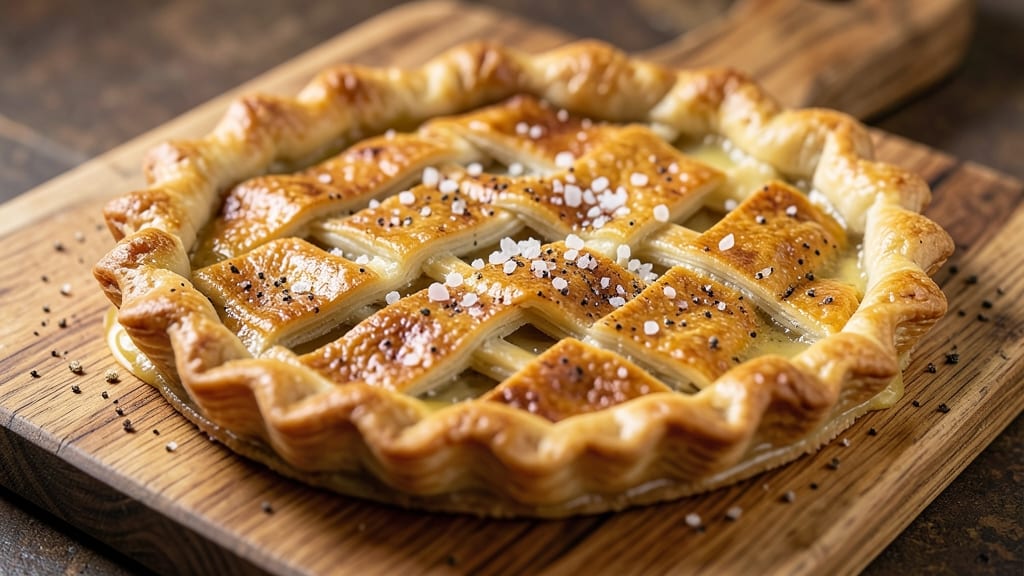
Alton Brown’s pie crust recipe delivers flaky, golden layers that rival any bakery—without the frustration of traditional methods. ✨ The secret lies in precise fat distribution and proper chilling, transforming simple ingredients like flour, butter, and ice water into a crust so crisp it practically sings.
I’ve perfected this technique over years of testing, ensuring every batch turns out tender yet sturdy enough for both fruit pies and savory tarts.
What sets this crust apart is its foolproof method: cold butter cut into flour using a pastry cutter (or your fingers) creates pockets of steam during baking, lifting the layers to perfection.
The dough rests twice—once in the fridge and again in the freezer—to relax the gluten and prevent shrinking. This isn’t just another recipe; it’s a restaurant-quality foundation for any dessert, with adaptable techniques for gluten-free or vegan versions.
By the time you blind-bake or fill this crust, you’ll have a crisp yet tender base that holds its shape under fruit juices or custards. The edges stay flaky, the center remains sturdy, and the aroma alone will have everyone asking for seconds.
Whether you’re baking a classic apple pie or experimenting with modern twists, this crust delivers consistent, professional results every time.
The beauty of this recipe is its versatility—use it for lattice crusts, deep-dish pies, or handheld tarts. Once you master the technique, you’ll never buy pre-made crusts again. Let’s get started with the exact steps that make this crust legendary.
Ingredients for alton brown pie crust
Seven essential ingredients transform into Alton Brown’s legendary flaky pie crust—where technique matters more than complexity.
| Ingredient | Amount | Notes |
|---|---|---|
| All-Purpose Flour 🌾 | 2 ½ cups | Unbleached, sifted for even distribution |
| Unsalted Butter 🧈 | 1 cup | Cold, cubed, European-style preferred |
| Ice Water 💧 | ½ cup | Freshly chilled, not tap water |
| Diamond Crystal Kosher Salt 🧂 | ½ tsp | Fine grain for precise seasoning |
| Granulated Sugar 🍚 | 1 tbsp | For subtle sweetness in crust |
| Ground Black Pepper 🌶️ | ¼ tsp | Freshly ground for depth |
| White Vinegar 🍶 | 1 tsp | For gluten development |
The unsalted butter is non-negotiable—European-style brands like Plugrá or Kerrygold yield richer flavor and superior flakiness due to higher fat content. Purchase it in bulk and store in the freezer to maintain cold temperature. For the all-purpose flour, opt for unbleached varieties like King Arthur or Gold Medal—bleached flours can yield slightly tougher crusts. The ice water is critical; tap water may contain minerals that interfere with gluten formation. If you're in a pinch, use cold water from the fridge instead, though it won’t be as effective. The Diamond Crystal kosher salt is preferred for its fine grain, allowing for precise seasoning without altering texture.
No ice water? Cold water from the fridge works, though the crust may be slightly less tender. Substituting butter for shortening (like Crisco) yields a sturdier crust but loses flakiness—ideal for deep-dish pies. For a vegan adaptation, replace butter with vegan butter or coconut oil, though texture may vary. The white vinegar enhances gluten development; if unavailable, lemon juice serves as a suitable alternative. For gluten-free versions, use a 1:1 gluten-free flour blend like King Arthur Measure for Measure, though chilling times may need adjustment. Pre-sifted flour can be used, but sifting at home ensures better aeration and even distribution of fat.
The dough must rest twice for optimal results: first in the fridge for 30 minutes, then in the freezer for at least 1 hour. This dual chilling prevents shrinking and enhances flakiness. Wrap the dough tightly in plastic wrap and store for up to 3 days in the fridge or 3 months in the freezer. For best results, blind-bake the crust before filling—sprinkle with dried beans or pie weights and bake at 375°F (190°C) for 15-20 minutes. Leftover dough can be re-rolled once, though it may lose some flakiness. The crust’s versatility shines in lattice designs, deep-dish pies, or handheld tarts, making it a pantry staple worth perfecting.
Why You'll Love This Recipe
- No-Fuss Technique: I swear by this cold butter method—no food processor, no stress. You just cut that cold butter into flour like you're chopping kindling, and the texture? Chef’s kiss. No tough kneading, no greasy mess.
- Buttery Perfection: That sugar in the dough? It’s not just sweet—it caramelizes when baked, giving the crust this golden, almost toasty edge that’s ridiculously good. And the butter? Creamy, rich, and melts into flaky layers like magic.
- Pie for Any Occasion: Use it for apple, pumpkin, or even savory galettes—this crust handles it all. I’ve made it for Thanksgiving, lazy Sundays, and even as a crust for a grilled cheese (yes, really). It’s my go-to for any pie-shaped craving.
- Budget-Friendly Staples: Flour, butter, salt, sugar—these are pantry basics you already own. No weird ingredients or pricey shortcuts. Honestly, it’s the kind of recipe that makes me feel like I’m feeding a crowd without breaking the bank.
Step-by-step instructions for alton brown's pie crust recipe
Master this technique and you'll achieve restaurant-quality flakiness with minimal effort.
👨🍳 Step 1: Combine Dry Ingredients with Cold Butter
In a large mixing bowl, whisk together the 2.5 cups All-Purpose Flour, 0.5 tsp Diamond Crystal Kosher Salt, 1 tbsp Granulated Sugar, and 0.25 tsp Ground Black Pepper. This dry blend forms the structural foundation of your crust. I like to use a whisk for even distribution, especially around the salt and pepper which can clump.
Cut the 1 cup Unsalted Butter into ½-inch cubes and place them in the flour mixture. Using a pastry cutter or your fingers, work the butter into the flour until you achieve a coarse crumb texture with pea-sized butter pieces visible. This is crucial—overworking will develop gluten and ruin the flakiness. You're looking for a texture similar to wet sand, where butter pieces remain distinct.
🥘 Step 2: Incorporate the Vinegar and Ice Water
Add the 1 tsp White Vinegar to the flour-butter mixture and toss gently with a fork or your hands. The vinegar helps activate the gluten just enough to create structure without overdevelopment. Create a well in the center and pour in the 0.5 cup Ice Water gradually, mixing just until the dough begins to come together.
Here's where precision matters: I use a rubber spatula to gently fold the dough, pressing lightly to encourage cohesion without compacting it. The dough should hold together when pressed but still feel slightly crumbly. If it's too dry, add 1 teaspoon more ice water; if too wet, sprinkle in 1 tablespoon more flour. The ideal consistency is when the dough forms a loose ball that doesn't stick to your hands.
🔪 Step 3: Form and Chill the Dough
Turn the dough onto a lightly floured surface and gently shape it into a 2-inch thick disc (about 8 inches in diameter). Wrap tightly in plastic wrap and refrigerate for at least 2 hours or up to 48 hours. This long rest period is non-negotiable—it allows the gluten to relax and the butter to firm up, which prevents shrinking during baking and ensures maximum flakiness.
I always press the plastic wrap directly against the dough to create a smooth surface. This makes rolling out later much easier. Place the dough on the bottom shelf of your fridge where it's consistently cold. The colder the dough stays, the better the final texture will be.
🍳 Step 4: Roll and Transfer to Pie Dish
Remove the dough from the refrigerator and let it sit at room temperature for 5-10 minutes—just enough to soften slightly but not warm through. On a lightly floured surface, roll the dough into a 12-inch circle, about ⅛-inch thick. I use a rolling pin with guides to maintain even thickness, rotating the dough as I roll to prevent uneven stretching.
Carefully transfer the rolled dough to your 9-inch pie dish, letting it gently drape over the edges. Trim any excess dough hanging over the edge with kitchen shears, leaving about ½-inch overhang. This extra dough will help create a beautiful fluted edge later. Gently press the dough into the corners of the pie dish to ensure even contact with the bottom and sides.
⏰ Step 5: Blind-Bake for Perfect Crispiness
Preheat your oven to 375°F. Line the crust with parchment paper, fill it with pie weights or dried beans, and bake for 15 minutes. Remove the weights and bake for an additional 10 minutes until the edges are light golden brown and the bottom is completely set. This blind-baking step prevents a soggy bottom when you add your filling later.
Here's my pro tip: I always prick the bottom of the crust with a fork before baking to prevent air pockets. After removing the weights, I use a small offset spatula to gently press down any areas that puffed up during baking. The crust should be crisp but not dark brown—you want that perfect golden hue that signals flakiness without burning.
Pro Tips For Making Alton Brown Pie Crust
- Cut Cold Butter: DESCRIPTION: This recipe depends on cold butter for flaky layers, but don’t pull it straight from the fridge—let it sit for 15 minutes first. I learned this the hard way when my crust turned out greasy and dense because the butter was too hard to cut properly. Use a bench scraper to slice it into pea-sized pieces, not big chunks.
- Pulse, Don’t Overmix: DESCRIPTION: The food processor is your friend, but resist the urge to pulse the dough into submission. Once the mixture clumps together, stop immediately—overworking it develops gluten and turns your crust into tough, sad pastry. My grandmother swore by this, and she was right: a few extra pulses ruin the whole thing.
- Chill the Dough Twice: DESCRIPTION: The recipe says to rest the dough for 30 minutes, but I double that time—especially in warm kitchens. Wrap it tightly in plastic and pop it in the fridge for an hour before rolling. This isn’t the prettiest method, but it’s the tastiest: less shrinking, more structure, and a better rise in the oven.
- Use a Mixer, Not Hands: DESCRIPTION: Skip the temptation to mix the dough by hand—it’s a recipe for frustration and uneven texture. A stand mixer with the paddle attachment handles the job faster and more evenly, especially when incorporating the ice water. I was skeptical until I tried it: the dough comes together smoother, and you avoid the dreaded "gluey" stage.
Best sauces and condiments for this alton brown pie crust
Classic Apple Butter
This sweet, spiced filling transforms your pie into a homey classic. Use 1 cup apple butter (like Mott's or homemade) mixed with 2 tbsp lemon juice for brightness. Spread evenly over the blind-baked crust and top with thin apple slices arranged in a lattice.
The caramelized sugar in the butter enhances the crust’s flakiness while complementing the apples’ tartness. 🍏
Creamy Vanilla Pastry Cream
For a custard-filled pie, whip up a vanilla pastry cream using 2 cups heavy cream, 4 egg yolks, ½ cup sugar, and 1 vanilla bean. Strain through a fine-mesh sieve for silky smoothness, then chill completely before filling.
The cream’s velvety texture contrasts beautifully with the crust’s crisp edges. Add a pinch of salt to balance sweetness. 🥄
Spiced Pumpkin Filling
Autumn calls for pumpkin! Mix 1.5 cups pumpkin puree (not pie filling) with ½ cup brown sugar, 1 tsp cinnamon, ¼ tsp nutmeg, and 1 egg.
The crust’s buttery richness pairs perfectly with pumpkin’s earthy notes. Blind-bake the crust first to prevent a soggy bottom, then fill and bake at 350°F for 40-45 minutes. 🎃
Rich Chocolate Ganache
Dessert lovers will adore a chocolate-filled pie. Melt 1 cup dark chocolate chips (70% cocoa) with 1 cup heavy cream over a double boiler, then cool slightly before pouring into the crust.
Chill the pie for 2 hours to set. The chocolate’s depth harmonizes with the crust’s buttery layers, creating a decadent contrast. Top with whipped cream or berries for freshness. 🍫
Savory Spinach and Gruyère Tart
Surprise your guests with a savory twist! Sauté 4 cups chopped spinach with 4 oz Gruyère cheese, 2 garlic cloves, and ¼ tsp nutmeg. Spread over the blind-baked crust and bake at 375°F for 25 minutes.
The crust’s flakiness stands up to the creamy cheese and wilted greens, making it a perfect brunch or appetizer. 🧀
Lemon Curd Swirl
Brighten up your pie with a lemon curd swirl. Make curd using ½ cup lemon juice, ¼ cup sugar, 3 egg yolks, and ¼ cup butter.
After blind-baking, spread the curd over the crust, then top with a second crust layer. Bake until golden. The citrusy tang cuts through the crust’s richness, creating a refreshing balance. 🍋
Nutrition facts
Frequently asked questions
Why does Alton Brown's recipe use ice water instead of regular water?
The ice water is crucial for creating a flaky texture. Cold water prevents gluten from developing too much, which keeps the layers tender. Plus, the ice melts slowly during mixing, giving you better control over the dough's moisture. Regular water would warm up too quickly, potentially making the crust tough.
Can I make this crust without a food processor or pastry cutter?
Use your fingers to cut the butter into the flour until you get pea-sized pieces. Work quickly to keep everything cold. The key is to avoid overworking the dough—just mix until the butter is evenly distributed. This method works just as well for achieving that signature flakiness.
How do I prevent my crust from shrinking during baking?
Shrinking happens when gluten develops too much or the dough isn't chilled properly. Always rest the dough for at least 2 hours in the fridge before rolling, and keep it cold while working. When transferring to the pie dish, gently press it into the corners without stretching. The double-chill method (fridge + freezer) is your secret weapon against shrinkage.
Is this crust suitable for deep-dish pies?
Yes, but with one adjustment: use shortening instead of butter for a sturdier structure. The butter version works best for classic fruit pies where flakiness is key. For deep-dish, you might also need to pre-bake the crust longer (up to 25 minutes) to prevent a soggy bottom when filled with heavy ingredients like cheese or custard.
Can I make this crust ahead of time?
This is one of its best features! Wrap the dough tightly and store it in the fridge for up to 3 days or freeze it for 3 months. Thaw overnight in the fridge before using. The longer rest actually improves the texture, making it even more flaky when baked. Perfect for meal prep!