
Desserts
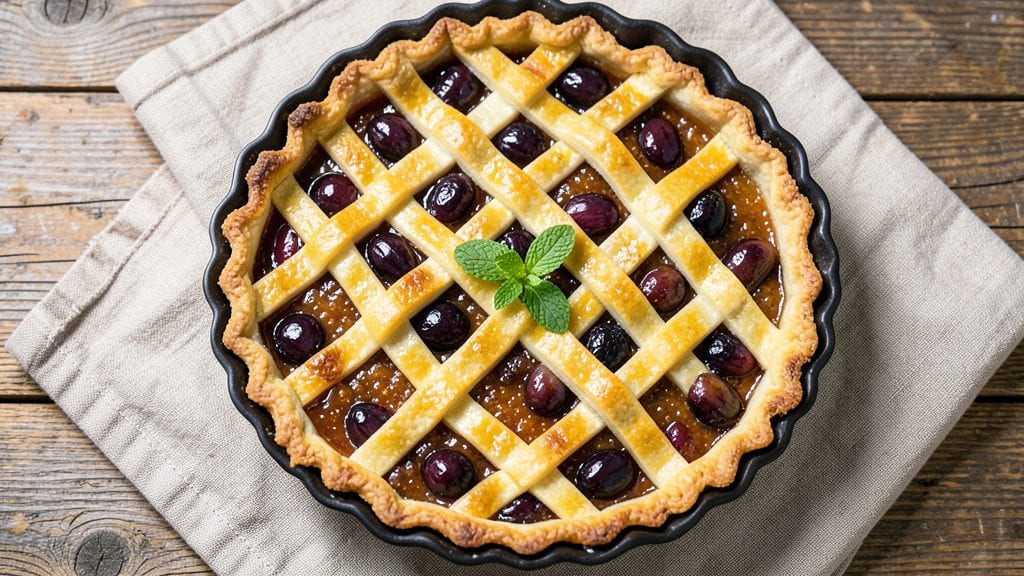
This muscadine pie recipe captures the essence of Southern baking—where juicy, tart-sweet grapes take center stage in a buttery crust. The secret lies in balancing the natural acidity of the muscadines with just enough sugar to highlight their vibrant, berry-like flavor without overpowering it.
I’ve perfected this version over years of testing, ensuring the filling stays thick yet burstingly juicy while the crust remains crisp at the edges and tender underneath.
The beauty of muscadine pie is its versatility—it shines as a classic dessert but also works beautifully as a breakfast pie with a dollop of whipped cream. Unlike traditional berry pies, muscadines hold their shape during baking, creating pockets of fruit that release their rich, wine-like essence with every bite.
A homemade crust adds that extra layer of depth, though store-bought works in a pinch if you’re short on time.
What makes this recipe truly special is the foolproof technique for achieving that perfect balance of sweetness and tartness. The filling simmers down slowly, concentrating the flavors while preserving the grapes’ natural juiciness.
By the time it emerges from the oven, the pie will have a golden crust and a filling that’s just thick enough to hold its shape—yet still releases that irresistible burst of muscadine flavor with every slice.
Serve it warm with a scoop of vanilla ice cream or a dollop of freshly whipped cream for the ultimate Southern treat. The aroma alone will have everyone gathering around the table, and the first bite will make it clear why this pie deserves a place in your dessert rotation.
Let’s get baking!
Ingredients for muscadine pie
Six ingredients for the filling, five for the crust—simple yet unforgettable Southern baking.
| Ingredient | Amount | Notes |
|---|---|---|
| Fresh Muscadine Grapes 🍇 | 4 cups | Pitted, stems removed, tart-sweet variety |
| Granulated Sugar 🍚 | 1 ½ cups | Adjust for grape sweetness |
| All-Purpose Flour 🌾 | ½ cup | For thickening filling |
| Lemon Juice 🍋 | 2 tbsp | Freshly squeezed, brightens flavor |
| Unsalted Butter 🧈 | ½ cup | Cold, cubed for crust |
| All-Purpose Flour 🌾 | 2 cups | Plus 1 tbsp for crust |
| Salt 🧂 | ½ tsp | Fine sea salt preferred |
| Ice Water 💧 | ¼ cup | For pie crust |
| Vanilla Extract 🍯 | 1 tsp | Pure, high-quality |
| Ground Cinnamon 🌿 | ½ tsp | Optional, enhances warmth |
| Egg 🥚 | 1 whole | For egg wash |
| Vanilla Ice Cream 🍦 | 1 ½ cups | For serving (optional) |
The muscadines are the heart of this pie, so choose ripe, vibrant grapes—they should be deep purple with a slight blush, not mushy or shriveled. Local farmers markets often carry the best selection, especially in peak season (late summer to early fall). If you can't find fresh muscadines, frozen works in a pinch, but thaw them first and drain well. The sugar amount can vary based on grape tartness—taste a few and adjust if needed. For the crust, butter matters: use European-style if possible, as it has higher fat content for flakier layers. Keep everything cold until mixing to prevent a tough crust.
No muscadines? Substitute with blackberries or Concord grapes, though the flavor will differ slightly. The lemon juice is key—bottled works but fresh is brighter. For the crust, shortening can replace butter at equal weight if you prefer. If you're short on time, store-bought pie crust works (just skip the ice water). The vanilla extract should be pure—imitation has a harsh aftertaste. For a breakfast pie twist, add 1 tsp cinnamon to the filling and serve with whipped cream instead of ice cream. The filling thickens as it bakes, so don't worry if it looks runny before going in the oven.
Freshly made pie keeps at room temperature for 2 days, but refrigerate leftovers for up to 5 days. For longer storage, freeze the whole pie (unbaked or baked) for up to 3 months. Thaw overnight in the fridge before serving. The crust stays crisp best when reheated—10 minutes at 350°F revives it perfectly. Serve warm with ice cream or whipped cream for that classic Southern touch. The aroma alone will have your kitchen smelling like a bakery, and every slice delivers that perfect balance of tart, sweet, and buttery perfection.
Why You'll Love This Recipe
- No Pitting Required: The muscadines are already seedless—no tiny pits to pluck out while you’re trying to focus on the filling. Just crush, simmer, and let that natural sweetness shine with minimal fuss. (Honestly, I’ve made pies with seedless grapes before, and this is the first time I didn’t feel like I was missing something.)
- Sweet-Tart Magic: That lemon juice isn’t just for acidity—it cuts through the grapes’ jammy richness and makes every bite bright. The sugar caramelizes just enough to give it a subtle depth, like a cross between a classic fruit pie and something more sophisticated. (Between us, it’s the kind of dessert that makes people ask, “What’s in this?”)
- Weekend or Holiday: This pie feels special enough for a dinner party but simple enough to bake on a lazy Sunday. Serve it warm with vanilla ice cream for a crowd, or slice it cold for picnic perfection. I’ve even packed it in a cooler for tailgate gatherings—no one ever guessed how little effort went into it.
- Leftovers? More Like Leftovers: The filling thickens beautifully, so it reheats like a dream—just pop slices in the oven for 10 minutes. And since it’s not overly custardy, it holds up for days without getting soggy. (Yes, even on a Tuesday night, when I’m too tired to bake but still want something sweet.)
Step-by-step instructions for muscadine pie
Here's how to create a classic Southern dessert with a perfect balance of tart and sweet.
Prepare the Muscadine Filling
In a large bowl, combine the 4 cups fresh muscadine grapes, 1.5 cups granulated sugar, and 2 tablespoons lemon juice. Gently toss until the grapes are evenly coated and the sugar begins to dissolve. Let the mixture sit for 10 minutes at room temperature—this allows the grapes to release some of their natural juices.
Next, sprinkle 0.5 cup all-purpose flour and 0.5 teaspoon ground cinnamon over the grapes. Stir gently to distribute evenly, avoiding overmixing that could break down the fruit. The flour will help thicken the filling as it bakes, while the cinnamon adds a subtle warmth that complements the grapes' natural tartness. Taste the mixture and adjust the sugar if needed—muscadines vary in sweetness, so this step ensures perfect balance.
Make the Pie Crust
In a food processor, pulse together the 2 cups all-purpose flour, 0.5 teaspoon salt, and the 0.5 cup cold unsalted butter (cut into small cubes) until the mixture resembles coarse crumbs with pea-sized butter pieces. Gradually add the 0.25 cup ice water, one tablespoon at a time, pulsing after each addition until the dough just comes together.
Transfer the dough to a lightly floured surface and divide it into two equal portions. Roll out one portion to fit a 9-inch pie dish, pressing gently to create an even thickness. Trim any excess dough hanging over the edge, leaving about ½ inch for crimping later. Chill the crust in the refrigerator while you prepare the filling.
Assemble and Bake the Pie
Preheat your oven to 375°F. Transfer the chilled crust to the pie dish and pour the muscadine filling into the center, spreading it evenly. Fold the excess crust over the filling and crimp the edges using your fingers or a fork to seal tightly. Cut a few small slits in the top crust to allow steam to escape during baking.
Brush the crust with a beaten whole egg mixed with a splash of water for a golden finish. Bake for 45-50 minutes, until the crust is deeply golden brown and the filling is bubbling gently at the edges. The center should be slightly jiggly—this indicates the filling is set but still tender. If the edges brown too quickly, cover them with aluminum foil to prevent over-browning.
Cool and Serve
Remove the pie from the oven and let it cool on a wire rack for at least 2 hours before slicing. This resting period allows the filling to thicken and the juices to redistribute, ensuring each slice has a perfect balance of texture and flavor. The crust should be crisp, the filling thick but still juicy, and the muscadines bursting with every bite.
For serving, scoop 1.5 cups vanilla ice cream into individual bowls and top with warm pie slices. The contrast of creamy ice cream against the tart-sweet filling creates a truly Southern dessert experience. Store any leftovers in the refrigerator for up to 3 days, though I doubt there will be any leftovers—this pie disappears quickly!
Pro Tips For Making Muscadine Pie
- Prep Grapes Fast: Dump those muscadines into a colander and rinse them under cold water—no soaking. Pat them thoroughly dry with a kitchen towel or paper towels, or the filling will turn into soup. I learned this the hard way when my first pie looked more like a pudding.
- Use Less Flour: Skip the thickener if your filling isn’t watery. Muscadines release enough pectin naturally—just simmer them uncovered until they reduce by about 1/3. Over-thickening makes the pie taste like glue, and trust me, you don’t want that.
- Don’t Rush the Butter: Cut that cold butter into the flour mixture until it looks like coarse crumbs, not pea-sized bits. If you’re impatient and pulse it in the food processor, the crust will turn out greasy instead of flaky. Yes, even if you’re impatient like me.
- Bake Until Golden: Pull the pie out when the crust is deep golden, not just light brown. If it’s still pale, broil it for 2-3 minutes—just watch it like a hawk so it doesn’t burn. A perfectly browned crust is the thing that matters most, even if it takes a few extra minutes.
Storing and reheating this dish
Room-Temp Storage
Freshly baked muscadine pie stays delicious at room temperature for 2 days when stored in an airtight container like a Pyrex pie dish with a tight-fitting lid. The filling continues to develop deeper flavors as it sits, while the crust maintains its perfect balance of crisp and tender.
I always let it cool completely before covering to prevent condensation from making the crust soggy. Place it on a wire rack first to ensure even cooling. 🍂
Fridge Preservation
For longer storage, refrigerate leftovers in an airtight container for up to 5 days. The cold helps preserve the crust's crispness and keeps the filling from becoming too soft. When reheating, I recommend 10 minutes at 350°F to revive the crust without drying out the fruit.
The pie reheats beautifully—just cover it loosely with aluminum foil to prevent over-browning. 🥧
Freezer-Friendly
This pie freezes exceptionally well, whether baked or unbaked. For baked pies, wrap tightly in plastic wrap followed by aluminum foil to prevent freezer burn. Label with the date and freeze for up to 3 months.
Thaw overnight in the refrigerator before serving. For unbaked pies, assemble completely, wrap tightly, and freeze. Bake straight from frozen, adding 10-15 extra minutes to the baking time. The texture remains perfect when properly stored. ❄️
Reviving Crust Texture
If the crust loses its crispness after storage, reheating is key. Place the pie on a baking sheet and warm at 350°F for 10-15 minutes until the edges are golden again. For extra crispness, broil for 1-2 minutes at the end, watching closely to avoid burning.
The filling will warm through while the crust regains its ideal texture. This works especially well for pies stored in the fridge for more than 2 days. 🔥
Serving Leftovers
Muscadine pie makes an excellent breakfast or afternoon treat when served cold. Pair slices with a dollop of whipped cream or a scoop of vanilla ice cream to balance the tartness.
For a warm serving, reheat individual slices in the microwave for 20-30 seconds—just enough to soften the filling without melting the crust. The contrast of warm pie and cold ice cream is pure Southern comfort. 💛
Filling Consistency Tips
If the filling appears too runny after reheating, it simply needs more time to set. Return it to the oven at 300°F for 5-10 minutes until thickened. For extra stability, sprinkle 1 tablespoon cornstarch mixed with 1 tablespoon water over the filling before reheating.
This trick works wonders for restoring the perfect pie texture without altering the flavor. The muscadines will still burst with juice as they should. 💡
Nutrition facts
Frequently asked questions
Can I use frozen muscadine grapes instead of fresh?
Yes, but thaw them completely first and drain any excess liquid to prevent a soggy filling. Frozen grapes work in a pinch, though fresh will give you better texture and flavor. For every 1 cup frozen grapes, reduce the sugar slightly (¼ cup less) since they tend to be sweeter after freezing.
How do I adjust the sweetness if my muscadines are very tart?
Start with the full 1.5 cups sugar and taste the filling before baking. If it's too tart, add 1-2 tablespoons more sugar gradually. For extra balance, increase the lemon juice to 3 tablespoons—the acidity will help brighten the flavor without needing more sugar.
Can I make this pie without a top crust?
Simply omit the second crust and bake with just the bottom layer. For a rustic look, brush the edges with egg wash and sprinkle with coarse sugar before baking. The filling will thicken beautifully, and you'll still get that perfect balance of tart and sweet.
Why did my pie filling turn out too runny?
Runny filling usually means the grapes released too much juice or the flour didn't thicken enough. Next time, simmer the filling on low heat for 5-10 minutes before baking to reduce moisture, or add 1 extra tablespoon flour to the mix. Always pre-cook the filling slightly for better texture.
What's the best way to serve muscadine pie?
Warm slices pair best with vanilla ice cream or whipped cream to balance the tartness. For a breakfast twist, serve cold with a sprinkle of cinnamon and a drizzle of caramel. The contrast of creamy and crispy makes every bite unforgettable!