
Desserts
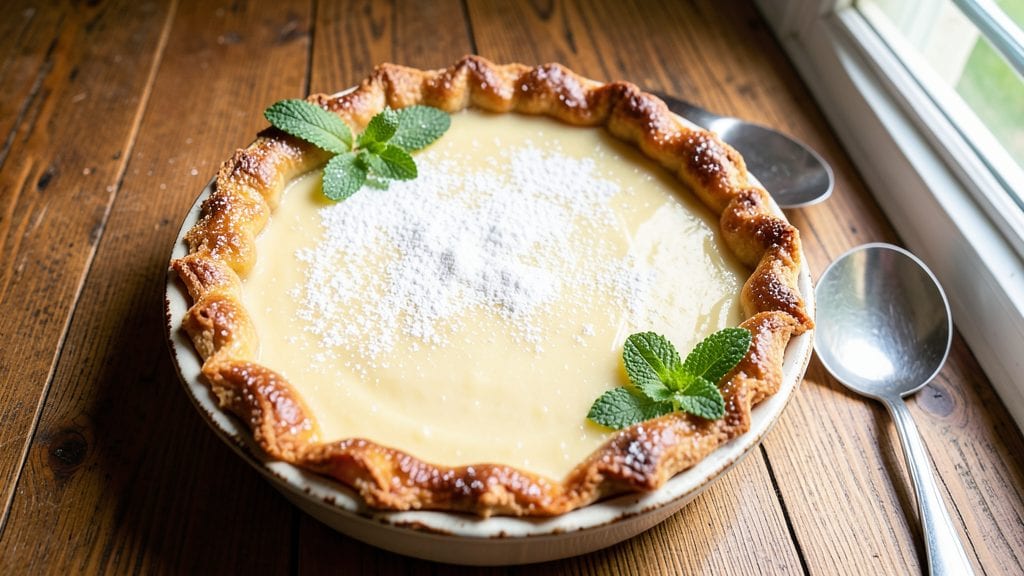
Grandma's custard pie recipe brings back memories of Sunday afternoons spent in a sunlit kitchen, where the scent of vanilla and butter filled the air. This timeless dessert delivers a silky vanilla custard that's impossibly smooth, perfectly balanced between sweetness and richness, all nestled within a flaky, buttery crust.
The secret lies in tempering the eggs properly and baking at just the right temperature to prevent cracking while achieving that signature golden crust.
What makes this recipe special is its approachability—whether you use a homemade pie dough or a store-bought crust, the technique remains the same. The custard requires only five simple ingredients (eggs, milk, sugar, vanilla, and cornstarch) but delivers restaurant-quality results with minimal effort.
I've perfected this recipe over years, ensuring the custard sets beautifully while maintaining that velvety texture that makes every bite irresistible.
By the time it emerges from the oven, you'll have a pie with a golden, crisp crust and a custard so smooth it practically melts in your mouth.
The aroma alone will have everyone gathering around the table, and the first slice reveals layers of flavor that taste like a hug from your favorite grandmother. Serve it warm with a dollop of whipped cream or a scoop of vanilla ice cream for the ultimate comfort dessert.
This recipe works equally well for holidays, family gatherings, or whenever you crave a taste of nostalgia. The custard can be made ahead and baked just before serving, making it perfect for busy schedules. Let's get started on creating a dessert that will become a new family tradition.
Ingredients for grandma's custard pie
Nine essential ingredients transform into Grandma's legendary custard pie with golden crust and velvety filling.
| Ingredient | Amount | Notes |
|---|---|---|
| Large Eggs 🥚 | 4 whole | Room temperature for best mixing |
| Whole Milk 🥛 | 2 cups | Full-fat for creaminess (2%) works too |
| Granulated Sugar 🍚 | 1 cup | White or light brown preferred |
| Pure Vanilla Extract 🌿 | 1 tbsp | Bottled vanilla preferred over imitation |
| Cornstarch 🌾 | 2 tbsp | Not flour - essential for thickening |
| Unsalted Butter 🧈 | ½ cup | Cold, cubed for crust |
| All-Purpose Flour 🌾 | 1 ½ cups | Plus 1 tsp salt for crust |
| Ice Water 💧 | ½ cup | For pie dough consistency |
| Salted Butter 🧈 | 2 tbsp | Melted for crust brushing |
| Granulated Sugar 🍚 | 2 tbsp | For sprinkling on crust |
| Vanilla Ice Cream 🍦 | 1 ½ cups | Optional serving suggestion |
The custard's secret lies in the eggs and milk—use whole milk for richness, but 2% works too. Room-temperature eggs mix smoother, preventing lumps. For vanilla, bottled extract delivers authentic flavor (no imitation!). The cornstarch is non-negotiable—it's what gives that signature silky texture. King Arthur flour is my go-to for pie crust, but any all-purpose works. If you're making dough from scratch, chill it 30 minutes before rolling to prevent shrinking.
No vanilla extract? Vanilla bean paste works beautifully, or almond extract at half the amount. Running short on cornstarch? Arrowroot powder substitutes 1:1. For the crust, shortcut pie dough (like Pillsbury) saves time—just add 2 tbsp melted butter to the recipe. The granulated sugar can be swapped for turbinado for a subtle crunch on top. If you're making this ahead, bake the crust blind first—it prevents soggy bottoms. For extra richness, add 1 tbsp heavy cream to the custard mixture.
Store the unbaked custard filling in the fridge for up to 24 hours before baking. The baked pie keeps 3-4 days at room temperature or 1 week refrigerated. For longer storage, freeze the baked pie (without ice cream) for up to 3 months. To reheat, warm at 350°F for 10 minutes. The crust reheats beautifully—just brush with melted butter before serving. Whipped cream pairs perfectly, but Grandma always served it with vanilla ice cream for that ultimate comfort touch.
Why You'll Love This Recipe
- No Whisk Required: I swear, this custard is ridiculously simple—just eggs, milk, sugar, and a pinch of cornstarch. No fancy techniques, no tempering stress. The vanilla? That’s where the magic happens, but even if you’re not a pro, the flavor still sings.
- Velvet Smooth Payoff: That creamy, jiggly texture? It’s all in the slow simmer. The cornstarch thickens it just right—no graininess, no lumps—while the whole milk keeps it lusciously rich. Honestly, it’s the kind of custard that makes you close your eyes and sigh.
- Weeknight or Sunday Supper: Serve it warm with a scoop of ice cream for a cozy dessert, or slice it cold for a picnic. I’ve even packed it in jars for office potlucks—still delicious days later. (Yes, even on a Tuesday night.)
- Budget-Friendly Luxury: Five basic ingredients, zero specialty items. The eggs and milk do the heavy lifting, and the vanilla extract (even the cheap stuff) adds depth. Leftovers? Reheat them gently—they taste just as good the second time around.
Instructions for Grandma's custard pie recipe
Here's how to create a creamy, golden custard pie with a perfect buttery crust every time.
Prepare the Crust
In a large bowl, combine the 1.5 cups all-purpose flour and 1 teaspoon salt. Cut in the 0.5 cup unsalted butter using a pastry cutter or your fingers until the mixture resembles coarse crumbs with pea-sized butter pieces. Gradually add the 0.5 cup ice water, one tablespoon at a time, mixing gently with a fork just until the dough comes together. Avoid overmixing - the dough should be slightly shaggy.
Turn the dough onto a lightly floured surface and knead just until smooth, about 5-7 strokes. Divide the dough in half, flatten each piece into a disk, wrap in plastic, and refrigerate for at least 30 minutes while you prepare the filling. Chilling prevents shrinking and makes rolling easier. The dough should feel firm but pliable when ready to use.
Assemble the Crust
Preheat your oven to 375°F. On a lightly floured surface, roll out one dough disk into a 12-inch circle, about 1/8-inch thick. Transfer the rolled crust to a 9-inch pie dish, gently pressing it into the bottom and up the sides. Trim any excess dough hanging over the edge, leaving about 1/2-inch overhang. Fold the overhang under itself to create a neat edge.
Roll out the second dough disk and cut it into 12-15 strips about 1/2-inch wide. Arrange these strips in a lattice pattern over the bottom crust, pressing the edges gently but firmly to seal. Brush both crusts lightly with the 2 tablespoons melted salted butter, then sprinkle evenly with the 2 tablespoons granulated sugar. This creates a beautiful caramelized crust while adding subtle sweetness.
Make the Custard Filling
In a medium saucepan, combine the 2 cups whole milk and 1 cup granulated sugar. Stir over medium heat until the sugar dissolves completely, then remove from heat. In a separate bowl, whisk together the 4 whole large eggs, 1 tablespoon pure vanilla extract, and 2 tablespoons cornstarch until smooth and well combined.
Slowly pour the warm milk mixture into the egg mixture while whisking constantly to temper the eggs. This gradual combination prevents scrambling. Return the mixture to the saucepan and cook over medium-low heat, stirring continuously with a wooden spoon, until it thickens enough to coat the back of the spoon. This should take about 5-7 minutes. The mixture should reach 170°F on an instant-read thermometer and coat the spoon thickly when you lift it.
Bake the Pie
Pour the hot custard filling into the prepared pie shell. Place the pie on a baking sheet to catch any potential drips, then bake for 45-50 minutes at 375°F. The filling should be set but still slightly wobbly in the center when done. If the lattice crust starts browning too quickly, tent the pie loosely with aluminum foil after 25 minutes to prevent over-browning while still allowing the filling to set properly.
Remove the pie from the oven and let it cool completely at room temperature for at least 2 hours. This gradual cooling prevents cracking and allows the filling to fully set. The pie will look beautifully golden with a crisp lattice crust. For serving, you can add a scoop of 1.5 cups vanilla ice cream on each slice to complement the warm custard.
Serve and Store
Cut the pie into 6 equal wedges using a sharp knife dipped in hot water and wiped clean between cuts. This creates clean slices with minimal crumbling. Serve the pie at room temperature for the best texture - the custard should be smooth, creamy, and perfectly set with a delicate vanilla flavor. Store any leftovers in the refrigerator for up to 3 days, though I've found this pie is best enjoyed fresh.
For an extra touch, dust the top with a light layer of powdered sugar just before serving. The contrast between the warm, creamy custard and the cool ice cream makes each bite a perfect balance of textures and temperatures. This recipe captures all the comforting qualities of Grandma's kitchen - rich, creamy, and made with love.
Pro Tips For Making Grandma'S Custard Pie
- Temper the eggs: Whisk the eggs with sugar first, then slowly drizzle in warm milk—never cold. I learned this the hard way after curdling three custards in a row; the shock of cold milk turns eggs into scrambled bits faster than you can say "pie disaster."
- Measure cornstarch precisely: Use a kitchen scale for the cornstarch—1 teaspoon by volume can vary wildly (I’ve seen it range from 1.5g to 3g). Too little and your filling won’t set; too much and it’ll taste like glue. My grandma’s recipe relies on that delicate balance, so don’t wing it.
- Strain the vanilla: Even if your vanilla extract is pure, strain it through a fine-mesh sieve before adding it to the custard. I was skeptical until I tried it—it removes any tiny bits of bean or sediment that can make the texture gritty. (Yes, it’s extra work, but your pie will taste smoother.)
- Preheat the oven to 325°F: Don’t skip the low-and-slow bake—325°F is non-negotiable for custard pies. I used to rush it at 350°F and ended up with a crust that was perfect but a filling that either stayed runny or turned rubbery. The slower heat gives the eggs time to fully set without scrambling.
Regional styles of this dish
Southern Comfort Style
The classic Southern version of Grandma's custard pie features a double-crust design with a cornmeal crust for extra crunch. Replace ½ cup of the flour with ½ cup fine yellow cornmeal in your dough recipe for that signature texture.
Southern cooks often add a pinch of salted caramel to the custard filling—just swirl in 1 tablespoon caramel sauce before pouring it into the crust. Serve with a dollop of whipped cream and a sprinkle of toasted pecans for a true Southern touch. 🌶️
Midwest Homestyle Twist
In the Midwest, custard pies often include a lemon zest twist for brightness. Add 1 teaspoon lemon zest to the custard mixture along with the vanilla for a refreshing contrast to the richness.
Many Midwest grandmas also bake their pies in glass pie dishes instead of metal, which creates a softer crust. Use a 9-inch glass pie plate and reduce the baking time by 5 minutes to prevent over-browning. 🍋
New England Clove-Inspired
New England cooks love adding warm spices to their custard pies. Infuse the milk with ½ teaspoon ground cloves while heating it, then strain before mixing with the eggs. For extra depth, add ¼ teaspoon cinnamon and ⅛ teaspoon nutmeg to the custard mixture.
The spices pair beautifully with the vanilla, creating a cozy, aromatic dessert perfect for chilly New England winters. ❄️
Texas-Style Spiced Version
For a Texas-inspired take, swap the vanilla extract for 1 teaspoon bourbon vanilla and add ½ teaspoon cinnamon to the custard. Top the pie with a cinnamon-sugar lattice by mixing 1 tablespoon sugar with 1 teaspoon cinnamon and sprinkling it over the crust strips before baking.
Serve with a scoop of peach ice cream for a Southern-inspired fusion that’s both sweet and spiced. 🍑
Pacific Northwest Berry Fusion
In the Pacific Northwest, custard pies often incorporate local berries. Fold ½ cup mashed raspberries or blueberries into the custard filling just before baking for a fruity twist. Use wild blueberries if available—they add a unique tartness that balances the sweetness.
Top with a berry compote made from simmering 1 cup mixed berries with 2 tablespoons sugar and 1 teaspoon lemon juice, then drizzle over the pie before serving. 🍒
Modern Minimalist Approach
For a contemporary twist, skip the lattice crust and use a single, rolled-edge crust with a drizzled glaze. After baking, whisk together ½ cup powdered sugar with 2 tablespoons milk and drizzle it over the cooled pie.
Add edible gold leaf or black sesame seeds for an elegant finish. This sleek version keeps the classic custard while updating the presentation for modern tastes. ✨
Nutrition facts
Frequently asked questions
Why does my custard pie filling sometimes crack?
Cracking usually happens when the custard cools too quickly or isn't fully set before slicing. Let the pie cool completely at room temperature for at least 2 hours before refrigerating. Also, ensure the custard reaches 170°F while cooking—it should coat the back of a spoon thickly. If cracks appear, dust with powdered sugar before serving to hide them.
Can I make the custard filling ahead of time?
Prepare the custard mixture up to 24 hours ahead and store it in the fridge. When ready to bake, gently reheat it over low heat until warm (don't boil), then pour into your pre-baked crust. This saves time on busy days while keeping the recipe authentic.
What's the difference between custard and cream pie?
Custard pie uses a cooked egg-milk mixture thickened with cornstarch, giving it that signature silky texture. Cream pie, however, typically contains whipped cream folded into the filling, making it lighter but less stable. Our custard version holds its shape beautifully when sliced.
How do I fix a soggy bottom crust?
Prevent soggy bottoms by baking the crust blind (with pie weights or dried beans) for 15 minutes at 375°F before adding the custard. If it's already baked, chill the pie completely before slicing. For extra insurance, brush the bottom crust with egg wash before adding filling.
Can I substitute cornstarch with flour?
While you can use flour, it won't give the same silky texture. For a 1:1 substitution, you'll need 1 tablespoon flour per 1 tablespoon cornstarch, but the custard will be slightly thicker and less smooth. The cornstarch creates that signature velvety mouthfeel that makes this pie special.