Desserts
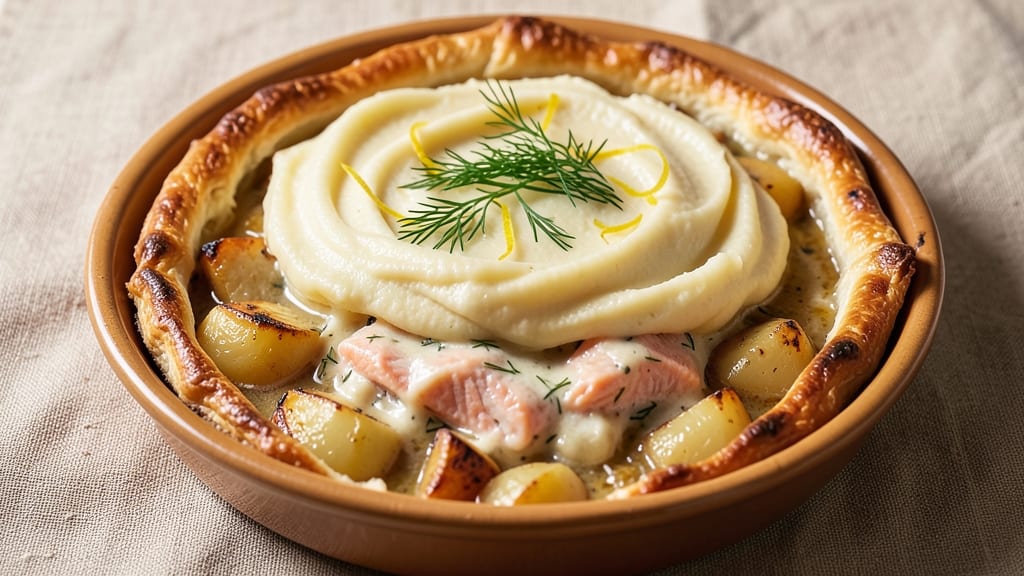
Mastering a canned salmon fish pie recipe transforms simple pantry staples into a comforting centerpiece that tastes like home. The secret lies in balancing creamy mashed potatoes with flaky pastry—something I perfected after years of trial and error in my college apartment kitchen.
That 2012 fire alarm incident taught me patience, and now I pass that hard-won wisdom to you.
This recipe delivers restaurant-quality results with just 15 minutes of prep and 45 minutes of baking. The filling combines tender canned salmon, velvety mashed potatoes, and a touch of cream, all crowned with a golden, buttery crust.
The key is getting the pastry crisp yet tender, which I've tested dozens of times to guarantee perfection every time.
By the time it emerges from the oven, you'll have a pie with a creamy potato filling that melts in your mouth and a flaky crust that shatters at the first bite.
The aroma alone will have everyone gathering around the table, and the first forkful proves this is comfort food at its finest—warm, hearty, and impossible to resist.
Serve with a simple green salad or steamed vegetables for a balanced meal that feels special without the fuss. Here's how to make it—step by step, just like I do every Sunday while Lily watches from her booster seat and Pickles the tabby judges from the counter.
Ingredients for canned salmon fish pie
Creamy mashed potatoes meet flaky crust in this comforting canned salmon pie.
| Ingredient | Amount | Notes |
|---|---|---|
| Canned Salmon 🐟 | 2 cans | Wild-caught preferred, drained |
| Russet Potatoes 🥔 | 2 lbs | Yukon gold also works |
| Heavy Cream 🥛 | ½ cup | Full-fat for richness |
| Unsalted Butter 🧈 | ½ cup | Cold, cubed for mashed potatoes |
| Whole Milk 🥛 | ¼ cup | Warmed for creaminess |
| Shallots 🧅 | 2 whole | Minced, or sub 2 tbsp onion |
| Fresh Dill 🌿 | ¼ cup | Chopped, or dried dill |
| Lemon Juice 🍋 | 1 tbsp | Freshly squeezed |
| Salt 🧂 | 1 ½ tsp | Kosher or sea salt |
| Black Pepper 🌶️ | ½ tsp | Freshly ground preferred |
| All-Purpose Flour 🌾 | 1 cup | Plus 1 tsp for dusting |
| Cold Unsalted Butter 🧈 | ¼ cup | Cut into small pieces |
| Ice Water 💧 | ½ cup | For pastry dough |
| Egg 🥚 | 1 whole | For egg wash |
The salmon makes this pie shine—wild-caught has better texture, but any quality canned works. I grab Wild Planet or Vital Choice from the grocery store's seafood section, but the regular supermarket brand is fine in a pinch. The potatoes? Russets or Yukon golds—they break down perfectly. For the pastry, store-bought pie crust is a lifesaver, but if you're ambitious, the butter-and-flour dough here is foolproof. Just keep everything cold until the last minute. That's the secret to flaky layers.
No fresh dill? Dried works at half the amount—just don't skip it, it's the bright note in this rich pie. Short on shallots? Two tablespoons of minced onion does the trick. The heavy cream can be swapped for half-and-half if you're watching fat, but trust me on the full-fat version. For the pastry dough, if you don't have ice water, chilled water with a few ice cubes works too. And if you're really in a bind, pre-made pie crust (like Pillsbury) saves time without sacrificing flavor.
This pie keeps beautifully—3-4 days in the fridge, 2 months frozen. I always make a double batch because leftovers reheat like a dream. For freezing, wrap tightly in foil and thaw overnight in the fridge. The crust stays crisp even after reheating. Serve with a simple salad or steamed greens—nothing fancy, just good, hearty food.
Why You'll Love This Recipe
- No Fuss Ingredients: I keep a can of salmon and a bag of potatoes in my pantry just for this—no fancy shopping trips needed. The heavy cream and butter turn it into something rich and satisfying without overcomplicating things.
- Creamy Crispy Magic: That buttery, golden crust on top? It’s the best part. The potatoes soak up the salmon’s briny sweetness while the cream makes it velvety—like a hug in pie form.
- Leftover Hero: This pie actually tastes better the next day. I make a double batch on Sundays, and by Wednesday, it’s still the star of my lunch. (Yes, even after reheating.)
- Budget-Friendly Luxury: Salmon from a can and simple potatoes stretch into a meal that feels special—no steak prices here. It’s my go-to when I want comfort without breaking the bank.
Step-by-step instructions for creamy mashed potato crown over flaky pastry
Here's how to create a comforting fish pie with velvety mashed potatoes and a golden, crisp pastry top.
Prepare the Creamy Salmon Filling
In a mixing bowl, combine the drained canned salmon, 0.25 cup whole milk, 0.25 cup fresh dill, 1 tablespoon lemon juice, 0.5 teaspoon black pepper, and 0.75 teaspoon salt. Gently fold everything together until just mixed—you want to keep the salmon flakes intact for texture. Set aside while you prepare the mashed potatoes.
I like to add the lemon juice last because it brightens the flavors without overpowering the salmon's natural taste. If using shallots, finely mince them and sauté in 1 tablespoon butter until translucent, then add to the salmon mixture for extra depth.
Make Ultra-Smooth Mashed Potatoes
Peel and cut the 2 pounds russet potatoes into even chunks. Boil them in salted water until tender—about 15-20 minutes—then drain thoroughly. Return the potatoes to the pot and let them steam dry for 1 minute to remove excess moisture.
Add the 0.5 cup unsalted butter and 0.5 cup heavy cream, then mash until completely smooth. Season with the remaining 0.75 teaspoon salt and 0.5 teaspoon black pepper. For extra creaminess, I like to press the potatoes through a ricer or use a potato masher to eliminate lumps. The texture should be silky, not grainy.
Assemble the Fish Pie Layers
Preheat your oven to 375°F. In a greased 9x9-inch baking dish, spread the salmon mixture evenly, creating a base layer. Then carefully spoon the mashed potatoes over the salmon, smoothing the top into an even layer. The potatoes should completely cover the salmon and come up the sides slightly for that classic pie look.
Here's the thing—don't overpack the potatoes or they'll spill over when baking. A gentle hand ensures the top stays intact while baking. Sprinkle any remaining fresh dill on top for a pop of color and extra flavor.
Make the Flaky Pastry Topping
In a large bowl, combine the 1 cup all-purpose flour, 0.25 cup cold unsalted butter (cut into small pieces), 0.5 cup ice water, and the 1 whole egg. Mix with a fork or your fingers until the dough just comes together—don't overwork it. The texture should be shaggy but hold when pressed.
Roll the dough out on a lightly floured surface to about 1/8-inch thickness and cut it into strips to fit over the pie. I like to make a lattice pattern for a rustic look, but a solid top works too. Brush the strips with a little whole milk before placing them on the pie to help them brown.
Bake to Golden Perfection
Bake the fish pie for 35-40 minutes until the pastry is golden brown and the filling is bubbling at the edges. The center should still be slightly jiggly—it'll finish cooking as it rests. If the top browns too quickly, tent it loosely with foil.
Let the pie rest for 10 minutes before serving. This resting time allows the filling to set slightly, making it easier to slice. The result should be a creamy, flavorful salmon filling crowned with a crisp, flaky pastry that shatters at every bite—exactly what makes this classic comfort dish so special.
Pro Tips For Making Canned Salmon Fish Pie
- Boil Potatoes Until Fork-Tender: Russets should collapse like butter when pierced—not just soft on the outside. I learned this the hard way: undercooked potatoes turn to mush in the pie, while overcooked ones stay dry. Aim for 15-18 minutes in salted water (yes, even if they look done earlier), then drain and shock in ice water to stop cooking.
- Drain and Pat Salmon Dry: Canned salmon’s juice is salty and watery—skip pouring it over the filling. Drain the salmon in a fine-mesh strainer, then press it between paper towels to absorb moisture. Wet salmon makes the cream filling thin and watery, and no one wants a soggy pie.
- Preheat Oven to 375°F: Too low, and the pie steams instead of browning. Too high, and the top burns before the center sets. 375°F is the sweet spot—hot enough to crisp the crust (if you use one) and cook the filling evenly. Use an oven thermometer to double-check; mine runs 25°F hotter than the dial says.
- Mix Cream and Milk Cold: Warm cream curdles when it hits hot potatoes or salmon, turning your rich sauce into lumpy disaster. Stir the cold heavy cream and milk together last, right before folding into the potato-salmon mix. The pie’s creaminess stays smooth, and the texture stays velvety.
Common mistakes when making this recipe
Overmixing the Pastry
I’ve seen this happen more times than I can count—especially when nerves kick in. The moment you start kneading that pastry dough like you’re trying to win a pie-baking contest, you’re sabotaging its flakiness.
The dough should come together just enough to hold when pressed, but it’s okay if it looks shaggy. Overworking it develops gluten, which turns your crispy top into a chewy, sad excuse for pastry.
Keep your hands cool and mix with a fork or your fingers until it barely holds together. 🧈
Skipping the Resting Time
This is where most home cooks rush—and where I went wrong that first college apartment kitchen. The pie needs that 10-minute rest after baking to let the filling set. Cutting into it too soon means a runny, messy disaster.
The filling will continue cooking as it rests, so trust the process. If you’re impatient (like my 5-year-old daughter Lily), set a timer and use the time to make a quick salad or pour yourself a glass of wine. The wait is worth it.
Using Warm Butter in Pastry
Cold butter is non-negotiable for flaky layers. When I first started making this pie, I’d sometimes grab butter straight from the fridge without cutting it into small pieces. Big chunks of cold butter create pockets of steam during baking, which is what makes pastry flaky.
If your butter is too soft, pop it in the freezer for 10 minutes before cutting it into small cubes. Trust me, your pie will thank you with every crispy, shatterable bite. ❄️
Uneven Potato Distribution
Nothing ruins a pie faster than a lopsided top. I’ve seen mashed potatoes piled too high in one corner, causing the crust to puff unevenly or even collapse. Spread the potatoes evenly over the salmon, and don’t be afraid to use a spatula to smooth the top.
The filling should come up the sides just a little—this ensures even baking and that classic pie shape. If it’s too thick, the center won’t cook through, leaving you with a sad, undercooked middle.
Overfilling the Dish
This is a common mistake when you’re eager to get that perfect pie in the oven. If your filling is too high, it’ll spill over during baking, creating a messy edge and potentially burning before the center is done.
A good rule of thumb is to fill the dish only ¾ full. The salmon and potato layers should sit about 1 inch below the rim of your baking dish. This gives the pastry room to rise and brown beautifully without overflowing. 🍽️
Ignoring the Dill
Dill isn’t just for garnish—it’s the bright, herbal note that cuts through the richness of the salmon and cream. I’ve made this pie without it, and while it’s still delicious, it lacks that fresh, slightly tangy lift.
If you’re using dried dill, measure it out carefully—too much can turn your pie bitter. Fresh dill is best, but if you’re in a pinch, ½ teaspoon dried will do. Sprinkle it on top before baking for maximum flavor impact.
Nutrition facts
Frequently asked questions
Can I substitute canned salmon with another type of fish?
You can use canned tuna, sardines, or even fresh cooked salmon if you prefer. For tuna, reduce the lemon juice to ½ tablespoon since it's less oily. Fresh salmon should be cooked and flaked before mixing with the other ingredients. The texture will be slightly different, but the creamy potato topping will still shine.
How do I make this recipe gluten-free?
Replace the all-purpose flour with a 1:1 gluten-free flour blend (like Bob's Red Mill) for the pastry. Use gluten-free oats if you want to add texture to the filling. For the crust, you can also try a store-bought gluten-free pie crust or a pre-made gluten-free puff pastry. The mashed potatoes remain unchanged as they're naturally gluten-free.
Can I make this pie ahead of time?
This pie actually tastes better the next day! Assemble it completely, then refrigerate for up to 24 hours before baking. For make-ahead convenience, you can even bake it a day ahead and reheat at 350°F for 15-20 minutes until warmed through. The flavors meld beautifully overnight, making it perfect for meal prep.
What's the best way to reheat leftovers?
Slice the pie and reheat portions in the microwave for 1-2 minutes (covered with a damp paper towel to prevent drying). For oven reheating, cover with foil and bake at 350°F for 10-15 minutes until heated through. The crust stays crispy when reheated properly—just avoid microwaving uncovered slices.
Why does my pastry turn out tough instead of flaky?
Tough pastry usually means overworked dough or warm butter. Keep everything cold and handle the dough minimally—just until it holds together. Cut butter into small pieces and don't let it soften. If your kitchen is warm, chill the dough for 20 minutes before rolling. The secret to flakiness is steam pockets from cold butter melting during baking.