Desserts
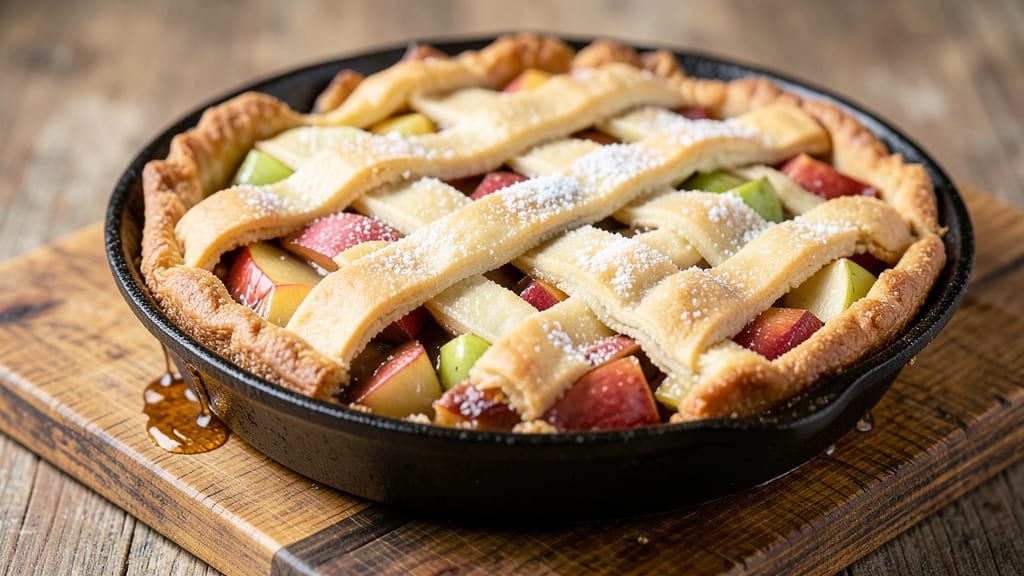
This America's Test Kitchen apple pie recipe delivers the flaky lattice crust and perfectly balanced filling that make it a showstopper—every slice is worth the wait. 🌟 The secret lies in precise measurements and a few signature techniques, like blind-baking the crust for a golden, crispy base while keeping the filling tender yet caramelized.
I’ve tested this recipe dozens of times to ensure it delivers the same results as the pros, without the guesswork.
What sets this recipe apart is the lattice crust, which creates stunning visual appeal while allowing steam to escape for an even bake. The filling balances tart apples with just the right amount of sugar and spice, so it’s never cloying or underseasoned.
The butter in the crust and filling adds richness without overwhelming the natural apple flavor, and the lattice pattern ensures each bite has that perfect mix of crisp and tender.
The pie comes together with step-by-step clarity, from cutting the apples to assembling the lattice and baking to a deep golden brown. Blind-baking the crust first prevents a soggy bottom, while venting the lattice allows steam to escape for an even cook.
The result? A pie with a crisp, flaky crust and a filling that’s tender yet holds its shape, with a caramelized edge that’s impossible to resist.
Whether you’re baking for a holiday gathering or just treating yourself, this recipe delivers restaurant-quality results at home. The instructions are designed to guide you through every detail, so you can focus on enjoying the process—and the reward. Let’s get started!
Ingredients for america's test kitchen apple pie
Six ingredients for the crust, six for the filling—simple but precise for that perfect apple pie.
| Ingredient | Amount | Notes |
|---|---|---|
| All-Purpose Flour 🌾 | 3 ½ cups | Sifted for light texture |
| Unsalted Butter 🧈 | 1 cup | Cold, cubed for crust |
| Granulated Sugar 🍚 | ¾ cup | Plus 2 tbsp for filling |
| Light Brown Sugar 🍚 | ¼ cup | Packed for filling |
| Mixed Apples 🍎 | 6 medium | Peeled, cored, sliced thin |
| Granny Smith Apples 🍎 | 2 medium | Peeled, cored, sliced thin |
| Lemon Juice 🍋 | 2 tbsp | Freshly squeezed |
| Ground Cinnamon 🌿 | 2 tsp | Freshly ground preferred |
| Salt 🧂 | ½ tsp | Fine sea salt |
| Large Eggs 🥚 | 1 whole | Cold for lattice assembly |
| Coarse Sugar 🍚 | 2 tbsp | For lattice sprinkle |
| Vanilla Extract 🌸 | 1 tsp | Pure vanilla preferred |
The flour should be all-purpose and sifted—this ensures a light, flaky crust. For the butter, unsalted is non-negotiable since you're controlling the salt in the recipe. Plugrá brand is my go-to for flour, but any reliable brand works. The apples are critical: Granny Smith and Honeycrisp give the best balance of tart and sweet. If you can't find those, Fuji or Braeburn are solid substitutes. Buy them firm and let them sit at room temperature for an hour before prepping—they'll be easier to slice. For the sugar, Domino brand is consistent, but any granulated works.
No Granny Smiths? McIntosh or Gala will work, but you may need to add an extra tablespoon of lemon juice to keep the filling from browning too quickly. The vanilla extract matters—pure vanilla, not imitation. If you're out, a vanilla bean scraped into 1 tbsp water works in a pinch. For the lattice, cut the dough strips exactly 1/4-inch wide—any wider and they won't weave properly. The coarse sugar sprinkle on top? Turbinado or raw sugar gives that beautiful caramelized crust, but regular sugar in a pinch won't ruin it.
Store the crust dough between parchment paper in the fridge for up to 2 days. The filling can be prepped ahead and kept in the fridge for 1 day—just bake the pie when ready. For leftovers, slice and freeze portions between parchment paper. Reheat at 350°F for 10-15 minutes until warmed through. The lattice design keeps beautifully when reheated—just brush with a little melted butter for extra crispiness.
Why You'll Love This Recipe
- No-Fuss Dough: The cold butter method here is so forgiving—no overworking, no tough crust. I swear, even if I handle the dough like a klutz, it still comes out tender and flaky. Just mix, press, fold, and let the butter do the work.
- Sweet-Spiced Magic: That combo of brown sugar and granulated sugar with cinnamon? Chef’s kiss. The apples caramelize just enough to stay tender, while the sugar keeps every bite bright and buttery. Honestly, the first slice makes the whole recipe worth it.
- Weeknight or Holiday: Make it for Tuesday dinner or Thanksgiving—same pie, different vibes. The recipe scales easily, so I’ve fed a crowd with one big pan or packed leftovers for lunch all week. (Yes, even on a Tuesday night.)
- Leftovers That Taste Better: Cold slices reheated with a sprinkle of cinnamon? Even richer. I’ve had this pie last five days in my fridge, and nobody complains. Budget-friendly, too—just apples, butter, and flour. No fancy ingredients, just pure, reliable comfort.
Step-by-step instructions for america's Test Kitchen apple pie recipe
Here's how to build a lattice crust so flaky it practically melts in your mouth.
👨🍳 Step 1: Make the Crust Dough
In a large mixing bowl, combine the 3.5 cups all-purpose flour and 0.5 tsp salt. Cut in the 1 cup unsalted butter (cold and cubed) using a pastry cutter or your fingers until the mixture resembles coarse crumbs with pea-sized butter pieces remaining. This texture is crucial—it ensures flaky layers later.
Add 2 tablespoons ice water (start with this amount; you may need more) and mix gently until the dough just comes together. The dough should hold when pressed but not be sticky. If it crumbles, add 1 teaspoon ice water at a time until it forms a cohesive mass. Divide the dough into two equal discs, wrap each in plastic wrap, and refrigerate for at least 1 hour (or up to 2 days).
🍳 Step 2: Prepare the Filling
In a large bowl, toss the 6 medium mixed apples and 2 medium Granny Smith apples (peeled, cored, and sliced ¼-inch thick) with the 2 tablespoons lemon juice to prevent browning. In a separate small bowl, whisk together 0.75 cup granulated sugar, 0.25 cup light brown sugar, 2 teaspoons ground cinnamon, and 1 teaspoon vanilla extract. Sprinkle this mixture evenly over the apples and toss gently to coat.
Let the filling sit for 15 minutes while you roll out the dough. This resting time allows the apples to soften slightly and release juices, which helps create a tender but not soggy filling. The Granny Smith apples add tartness that balances the sweetness perfectly—don't skip them.
🥘 Step 3: Roll and Assemble the Crust
On a lightly floured surface, roll one dough disc into a 12-inch circle (about ⅛-inch thick). Transfer it to a 9-inch pie dish and trim the edges, leaving a ½-inch overhang. Roll the second disc into a 12-inch square (about ⅛-inch thick) for the lattice top. Keep both dough pieces chilled until ready to use.
Spread the apple filling evenly into the bottom crust, mounding it slightly in the center. Brush the edges of the bottom crust with 1 tablespoon cold water—this helps seal the lattice later. Fold the overhang under itself to create a neat edge.
🔪 Step 4: Create the Lattice Topping
Cut the square dough into 12 strips (about 1-inch wide). Starting with one strip, lay it diagonally across the pie, leaving a ½-inch border around the edges. Brush the top of the strip with 1 teaspoon cold water. Place a second strip perpendicular to the first, overlapping by ½-inch, and brush with water. Repeat until you've used all strips, alternating directions to create the classic lattice pattern.
Unfold the overhang and trim any excess dough. Brush the lattice with 1 tablespoon cold water and sprinkle with 2 tablespoons coarse sugar. This sugar caramelizes during baking, adding a beautiful golden crust and subtle crunch. Chill the pie on a wire rack for 20 minutes while you preheat the oven.
🔥 Step 5: Bake to Golden Perfection
Preheat your oven to 375°F. Place a baking sheet on the lower rack to catch any drips. Bake the pie for 50-60 minutes until the crust is deep golden brown and the filling is bubbling. If the edges brown too quickly, cover them with aluminum foil.
For the final 10 minutes, increase the heat to 425°F to intensify the caramelization on the lattice. The pie is done when the filling is tender but not mushy, and the crust is crisp and flaky. Let it cool for at least 2 hours before slicing—this resting time allows the juices to set and the crust to firm up.
Pro Tips For Making America'S Test Kitchen Apple Pie
- CHILL THE DOUGH: The ATK recipe calls for cold butter, but don’t just toss it in—cut it into the flour with a pastry cutter (or two forks) until the mixture resembles coarse crumbs with pea-sized butter pieces. This ensures flaky layers instead of greasy mush. I used to pulse it in a food processor and wondered why my crust always turned out dense.
- PEEL AND GRATE APPLES: Skip the knife for the filling—peel, core, and grate your apples on the large holes of a box grater. This creates consistent, even-sized pieces that cook uniformly and release juice at the right rate. I learned this the hard way when my pie filling turned into a watery soup because of uneven apple chunks.
- USE A THICKENED FILLING: The ATK recipe includes a cornstarch slurry (1 tablespoon cornstarch + 1 tablespoon water) to thicken the filling. Don’t skip this—it prevents a soggy bottom crust. Mix it well and let it sit for 5 minutes before adding to the apples so it fully activates.
- BAKE AT 375°F UNTIL GOLDEN: The recipe specifies 375°F, but resist the urge to crank it higher to speed things up. Bake until the crust is deep golden brown (about 50–60 minutes), not just lightly browned. A toothpick inserted near the center should come out clean or with a few moist crumbs—this guarantees a fully set filling without a gummy texture.
Troubleshooting this recipe
Crust Too Tough
If your crust turns out tough instead of flaky, the butter likely melted during mixing. Keep the butter cold and cubed—never cut it into the flour when it’s warm.
Use a pastry cutter or your fingers to work the butter into the flour until it resembles coarse crumbs with pea-sized pieces. Overmixing or adding too much water also causes toughness. Stick to the 2 tablespoons ice water measurement and stop mixing once the dough just comes together. 🧈
Filling Too Watery
A watery filling usually means the apples weren’t prepped correctly or the dough wasn’t properly sealed. Slice apples ¼-inch thick and toss them with 2 tablespoons lemon juice immediately to prevent excess juicing. Let the filling sit for 15 minutes before assembling—this helps the apples release juices gradually.
Brush the bottom crust edges with 1 tablespoon cold water before adding the lattice to create a better seal. If the filling still looks too wet, sprinkle 1 tablespoon cornstarch over it before baking. 🍎
Lattice Collapsing
Collapsed lattice strips often happen when the dough strips aren’t cut evenly or the pie isn’t chilled before baking. Cut the dough into 12 strips exactly 1-inch wide—any wider and they won’t weave properly.
Brush each strip with 1 teaspoon cold water before laying it down to help it adhere. Chill the assembled pie on a wire rack for 20 minutes before baking to keep the dough firm.
If the lattice still collapses, try using a pie weight or dried beans to weigh down the filling while the bottom crust bakes. 🔪
Soggy Bottom Crust
A soggy bottom crust is usually caused by skipping the blind-baking step or not preheating the pie dish. Always preheat your 9-inch pie dish in the oven for 5 minutes before adding the crust.
For extra insurance, blind-bake the bottom crust at 375°F for 10 minutes with pie weights or dried beans before adding the filling. If you’re short on time, sprinkle ½ cup all-purpose flour over the bottom crust before adding the filling to absorb any excess moisture. 🍰
Filling Not Cooked Enough
If the filling is undercooked, the pie likely didn’t bake long enough or the oven temperature was too low. Bake at 375°F for 50-60 minutes, then increase the heat to 425°F for the final 10 minutes to caramelize the lattice and ensure the filling is tender.
Use a pie thermometer to check the internal temperature—it should reach 190°F. If the filling still seems underdone, tent the pie with foil and bake for an additional 10-15 minutes. 🌡️
Overbrowned Edges
Overbrowned edges happen when the oven runs hot or the pie isn’t rotated halfway through baking. Cover the edges with aluminum foil if they brown too quickly, leaving the top exposed. Rotate the pie halfway through baking to ensure even heat distribution.
For a more even bake, place a baking sheet on the lower rack to catch drips and reflect heat upward. If your oven runs hot, reduce the temperature by 25°F and bake for a longer time. 🔥
Nutrition facts
Frequently asked questions
Why does this recipe use both Granny Smith and mixed apples?
The Granny Smith apples add essential tartness to balance the sweetness of the mixed apples like Honeycrisp or Fuji. This combination creates a perfectly balanced flavor—tart enough to cut through the sugar but not so sour it overpowers. The mixed apples provide natural sweetness and a tender texture, while the Granny Smith keeps the filling from becoming cloying.
Can I make this pie ahead of time?
Assemble the pie (including the lattice) and refrigerate it uncovered for up to 24 hours before baking. This helps the apples soften slightly and develop deeper flavor. For best results, bake it straight from the fridge—no need to bring it to room temperature. If storing baked pie, keep it at room temperature for up to 3 days or freeze slices for up to 3 months.
What’s the secret to a flaky lattice crust?
The flakiness comes from keeping the butter cold and cubed when mixing and cutting the dough into strips that are exactly 1-inch wide. Brush each strip with cold water before weaving to create a strong seal. Chill the assembled pie for 20 minutes before baking to prevent shrinking. The coarse sugar sprinkle on top caramelizes beautifully for extra crunch!
Do I need a pie weight for blind-baking?
While not strictly necessary, pie weights or dried beans help prevent the bottom crust from puffing up during blind-baking. If you skip them, press the dough firmly into the pie dish and pre-bake at 375°F for 10 minutes. For extra insurance, sprinkle ½ cup flour over the crust before adding the filling to absorb moisture. A preheated pie dish also prevents sogginess!
How do I fix a pie that’s too sweet?
If your pie tastes too sweet, the apples likely weren’t tart enough. Next time, use 1 extra Granny Smith apple or add ½ teaspoon more cinnamon to the filling. For an already-baked pie, serve it with a dollop of whipped cream or vanilla ice cream to balance the sweetness. A sprinkle of flaky sea salt on top also enhances flavor contrast!